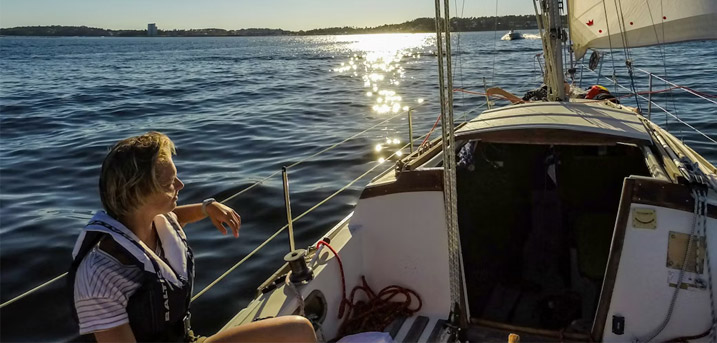
For generations, boating culture has carried a reputation – fair or not – of being a male-dominated world. Look across many marinas and you’ll still find more men than women at the helm, filling engine rooms, or charting offshore routes.
Yet the picture is changing quickly. Women are stepping into leadership roles on yachts, learning celestial navigation, buying their own vessels, and shaping the tone of boating communities, from local sailing clubs to long-range cruising networks. Their presence is no longer an exception; it’s a growing force that is reshaping the culture, expectations, and future of life on the water.
The growing interest in diversity isn’t just a trend; it’s an organic shift toward inclusivity that reflects a broader cultural recognition that the water belongs to everyone. As more women enter boating, they bring new ideas, new experiences, and new approaches to boating skills, leadership, and community building. Human stories resonate deeply in this space, and many women are telling stories that challenge old assumptions about who boating is “for.”
Still, despite the forward movement, unique challenges persist. Women often experience boating differently, from training opportunities and social expectations to physical considerations and safety concerns. Yet these challenges should not be considered as mere barriers; they are catalysts for innovation, connection, and empowerment. As the industry acknowledges these realities, doors continue to open, creating meaningful opportunities for women to thrive on the water.
Breaking Historical Patterns in Boating Culture
It’s impossible to understand the present without acknowledging the past. For decades, boating culture has been influenced by tradition, and many of those traditions assumed that men would steer the boat, manage the mechanical systems, and make navigational decisions. Women’s roles were often framed in the context of hosting, provisioning, or simply riding along as guests rather than active crew.
But as with any tradition, change comes when people re-examine old assumptions. Women entering the boating world today are doing so with intention, curiosity, and confidence. Many come from professional backgrounds where leadership is expected. Others enter boating because they want adventure, independence, or a new skill to master. Many simply grew up loving the water and now feel empowered to take ownership of that passion.
As more women take courses in navigation, marine engines, offshore safety, and weather routing, the narrative changes. Women are stepping forward not to replace men in the boating world, but to add their voices, skills, and perspectives. The result is a richer, more inclusive culture that benefits everyone on board.
Building Confidence Through Skill Development
One of the most important opportunities for women in boating is access to training that builds real, practical confidence. Confidence at sea doesn’t come from reading articles or watching others handle the vessel. It comes from hands-on skills: starting an engine that won’t turn over, mooring under wind pressure, tying the right lines, and plotting a safe route through unfamiliar waters.
Many women express that simply being invited to take the helm or participate equally in technical tasks changes everything. When partners, instructors, or mentors foster an environment where women can learn without pressure or condescension, those women often become some of the most capable and composed mariners on the water.
Women-only boating courses have become a valuable entry point. They provide a space free from assumptions about prior experience and allow participants to ask questions openly, strengthen their skills, and build networks. Once confidence is established, many women return to mixed-gender programs or join local boating communities with assurance and clarity in their abilities.
Women who pursue private instruction or mentorship often say it isn’t because they’re less capable; it’s because they want the same opportunities men have traditionally enjoyed. Access to knowledgeable instructors and supportive learning environments creates pathways for real empowerment.
Navigating Expectations and Social Pressures
Beyond training, many women navigate subtle social pressures that shape their experiences on the water. It’s common for female boaters to be addressed last during dockside conversations, for instructors to direct mechanical explanations to male partners, or for others to assume a woman isn’t the vessel’s owner even when she is.
These moments may seem small, but they can influence confidence and participation. Many women describe the challenge not as learning boating itself, but as overcoming assumptions about who should lead or who belongs in technical roles.
Yet these social challenges often motivate women to become even more skilled. Many female captains, cruisers, and marina managers say they began taking boating more seriously because they wanted to prove (to themselves, more than anyone) that they were fully capable of handling the vessel and navigating independently.
As awareness grows, more boating communities and training programs focus on creating inclusive cultures. Marinas and clubs that advocate for diversity see stronger membership and more engaged communities because they welcome people based on curiosity and passion rather than stereotypes.
Physical Considerations and Practical Adaptations
Boats are designed environments, and their ergonomics don’t always accommodate every body type equally. Tasks like pulling up a heavy anchor, climbing onto high decks, or handling lines under tension can require strength, but they can also require technique, creativity, and well-chosen equipment.
Many women adapt by focusing on leverage instead of force, using mechanical advantages, and relying on modern gear upgrades that benefit everyone. Electric winches, lighter-weight lines, improved anchor designs, and better deck hardware reduce unnecessary strain. These tools aren’t “adaptations for women.” Instead, they’re upgrades that improve safety and efficiency for all sailors.
Some women also face challenges related to confidence in close-quarters manoeuvring or mooring, not because the skills are inaccessible, but because the margin for error feels smaller under public scrutiny. Once they’ve received supportive instruction and had the chance to practice, many become exceptionally precise helmswomen. Their approach often emphasises patience, communication, and thoughtful planning.
Human Stories That Inspire Change
Human stories are at the heart of this topic. Across marinas, sailing clubs, and long-range cruising networks, countless women share stories that resonate far beyond the water.
There’s the woman who bought her first boat after retirement and circumnavigated solo, stepping into a dream she had postponed for decades. There’s the mother who navigated the Intracoastal Waterway with her young children, teaching them tides, currents, and navigation one anchorage at a time. There’s the engineer who rebuilt her own diesel engine because she wanted to understand every system before taking the boat offshore. There’s the teenager who learned to sail through a community program and is now pursuing a career in marine science.
These stories matter because they challenge assumptions, inspire newcomers, and demonstrate the richness of women’s contributions to boating culture. When women see others reaching goals on the water – big and small – it validates their own dreams and encourages them to take the next step.
Leadership Roles and Professional Pathways
More women are entering professional roles in marine industries, from yacht captains and boatyard managers to marine surveyors, sailing instructors, and harbour pilots. These positions were once considered unconventional career paths for women, but that perception is changing.
Professional visibility matters. When a woman steps onto the dock wearing a captain’s badge, young girls see a future they may not have imagined. When women lead sailing schools or manage marina operations, they create environments where other women feel welcome, supported, and taken seriously.
Even recreational leadership matters. Women who organise flotillas, lead community sailing clubs, mentor younger boaters, or contribute to cruising guides shape the culture in ways that ripple outward.
Opportunities in Community and Connection
Women entering the boating world often benefit from communities built around mutual support. Online groups, cruising forums, local meetups, and women-only sailing organisations provide encouragement, practical knowledge, and friendship. These connections help create safe spaces to learn, share experiences, and troubleshoot challenges.
Mentorship is particularly powerful. Experienced female boaters often take younger or newer sailors under their wing, helping them build confidence and skills. These relationships strengthen the boating community as a whole by promoting cooperation and inclusivity.
Safety, Preparedness, and Self-Reliance
Women often approach boating with a heightened emphasis on safety and preparedness. Many female cruisers prioritise emergency planning, redundancy in communication systems, and thorough pre-departure checks. They tend to value clarity in communication and consistency in decision-making, which improves safety for the entire crew.
This approach is not innate; it is often born from experience. Women who have had their knowledge underestimated, or who have been sidelined during key decisions, frequently commit to mastering boating skills deeply and thoroughly. The result is sailors who are confident, capable, and meticulous.
Representation in Media and Why It Matters
One of the quiet forces shaping the future of women in boating is representation. For years, sailing magazines, yacht ads, marina brochures, and even cruising documentaries often featured women only as smiling passengers or background figures. That kind of imagery sends a subtle but powerfully incorrect message about who boating is really “for.” When women never see themselves portrayed as captains, mechanics, navigators, or ocean-crossers, it becomes harder to imagine stepping confidently into those roles.
Today, that narrative is shifting. More publications are spotlighting female cruisers, instructors, and offshore racers. Social media has also played an enormous role. Women who document their journeys, whether it’s refitting an older sailboat, cruising the Great Loop, or restoring a classic trawler, invite others into their story. Their presence offers something traditional media rarely captured: the real, unfiltered day-to-day experiences of women who run their own boats.
It’s not uncommon for women to say they joined a sailing class, bought a boat, or learned diesel mechanics simply because they saw someone like themselves doing it online. Representation has a multiplier effect. Every visible role model creates dozens more, and each of those new voices helps make boating culture richer and more inclusive. As more women step into the spotlight, they’re helping others see what’s possible.
The Economic and Industry-Wide Opportunities for Women
Beyond personal empowerment, the rise of women in boating is reshaping the marine industry itself. As more women buy boats, enrol in training programs, and participate in sailing or cruising events, manufacturers and service providers are rethinking how they design and market products. Boat ergonomics, like ladder placement, winch height, helm visibility, hatch weight, and line handling, are receiving more attention than ever, often because women in focus groups or advisory roles are asking questions the industry previously overlooked.
This influence extends far beyond design. Women are entering marine service trades, opening rigging shops, running yacht-management businesses, and becoming surveyors, brokers, and marina engineers. Many boatyards report that female technicians bring meticulous attention to detail, exceptional diagnostic skill, and strong communication – qualities highly valued in a field struggling with labour shortages.
Women also represent a major growth market in boating education. Sailing schools and powerboat training programs increasingly offer women-led classes that fill up faster than mixed courses. This isn’t because women want segregated learning environments; it’s because a positive first experience creates lifelong boaters who later join mixed settings with confidence and enthusiasm.
Industry leaders are paying attention. Marine conferences now include diversity panels. Organisations are launching programs to train, onboard, and retain female professionals. And as women spend more time on the water, their economic influence shapes the direction of future product development.
Looking Toward the Future of Women in Boating
The future of boating is diverse, and women will play a central role in shaping it. As younger generations grow up with more inclusive outdoor cultures, more girls are joining youth sailing programs, participating in racing, and learning boat handling early. Many are entering marine trades, pursuing engineering degrees with maritime focus, or joining environmental advocacy groups tied to ocean protection.
The industry is responding as well. Boat manufacturers are paying closer attention to ergonomics and accessibility. Sailing schools are adopting inclusive training methods. Organisations are highlighting female leaders in marketing, publications, and events. And this trend is only likely to increase in influence in the future.
The Bottom Line
Women in boating face unique challenges, but each challenge reveals an opportunity: to build confidence, to develop new skills, to reshape traditional roles, and to strengthen the boating community with diverse perspectives. Their stories are powerful, inspiring, and emblematic of a broader cultural shift toward inclusion.
If you’re interested in finding the perfect yacht, you’ve come to the right place. We have thousands of new and used models for sale, across the world, and we have tools that make it easy to find the right fit for your needs. If you’re ready to get started, start browsing today!