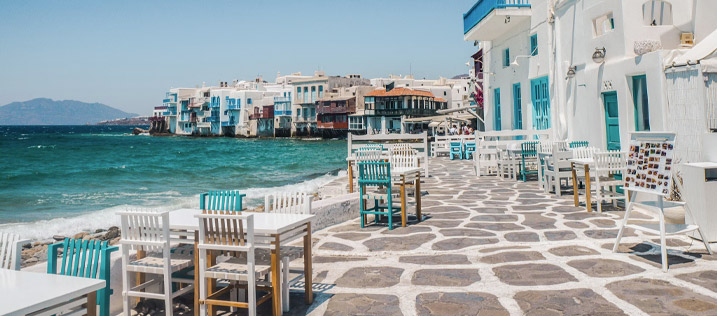
Typically, when you say you’re taking a “trip” or a “holiday” people imagine going to a resort, sitting in a chair with a cold drink in hand, and laughing as the hours pass. But that’s just your average trip. A sailing trip through the Cyclades is much more. It’s an immersion into one of the most storied corners of the Mediterranean. And whether you’re a seasoned sailor or stepping aboard a chartered yacht for the first time, you’re in for a journey that blends excitement, relaxation, adventure, and history into one amazing experience.
Getting Familiar with the Cyclades
When you set your course for the Cyclades, you’re entering a chain of islands that has been shaped by wind and water for thousands of years.
The name “Cyclades” comes from the Greek kyklos, meaning “circle.” These islands form a rough ring around the sacred isle of Delos, once the spiritual and commercial heart of the Aegean. (In ancient times, history tells us that Delos was a bustling trading hub and a major sanctuary dedicated to Apollo and Artemis.) Even today, when you sail into its harbour, you can feel the weight of that history in the marble ruins and stones.
The Cyclades include more than 200 islands, though only about 24 are inhabited. The landscape is dominated by rugged hills, cliffs plunging into the water, and long stretches of sandy or pebbled beaches.
From a sailor’s perspective, this geography is part of the adventure and the challenge. The open stretches between islands mean you’re often sailing in clean, unobstructed wind, but it also means you have to plan for swell, current, shelter, etc. Some harbours are pretty snug and perfectly protected, while others can be treacherous.
Though they share some common traits – whitewashed architecture, blue-domed churches, winding alleys – each island has its own personality. Mykonos, for example, thrives on glamour and nightlife, while Naxos feels grounded and agricultural. And then you have Milos, which is really a geologic wonder.
Each island’s history, trade links, and resources shape its current culture. You’ll find Venetian castles, Ottoman influences, neoclassical mansions, and tiny fishing villages all within a few sailing days of each other. (It’s really unlike anywhere else in the world.)
The Cyclades’ climate is dominated by the Meltemi, a seasonal wind that blows from the north, particularly strong in July and August. For sailors, understanding the Meltemi is key to a safe and enjoyable voyage. It can bring amazing sailing conditions, but it also demands respect – so you’ll want to plan your passages with this in mind.
In calmer months like May, June, September, and October, you’ll still have consistent breezes without the full intensity of high summer, making these seasons ideal if you’re just looking for leisurely travel.
On land, you’re limited to ferry schedules and road networks. At sea, you have direct access to hidden coves, remote beaches, and quiet anchorages. You can wake up in a bustling port, then sail for a few hours and drop anchor in a bay with no buildings in sight. (It’s pretty great!)
Understanding Seasons and When to Go
The time of year you choose to sail the Cyclades will have a direct impact on your trip – not just the weather, but also the crowds, costs, and even the routes you’ll want to take. Picking the right season is less about finding a “perfect” month and more about matching the conditions to your sailing style and expectations.
- High Season (July–August)
If you want the classic postcard version of the Cyclades, July and August deliver. These are the busiest months, both in terms of tourism and wind. The Meltemi winds, which can reach Force 6–7, are at their strongest during this period. For experienced sailors, this can mean exciting passages and quicker travel between islands. But if you or your crew are new to sailing, be prepared for choppier seas and occasional itinerary changes due to weather.
You’ll also be paying peak charter rates during these months, and berths at popular harbours can fill up by early afternoon. If you’re set on high season sailing, booking early and being flexible with your stops will make the experience far smoother.
- Shoulder Seasons (May–June & September–October)
For many sailors, the shoulder seasons are the sweet spot. May and June bring warm, sunny days without the full force of summer winds or crowds. The water is warming up, prices are lower, and you can usually find space in popular anchorages without having to arrive before noon.
September and early October offer similar advantages but with slightly warmer water – perfect for those who prioritise swimming and snorkelling. The Meltemi tends to be milder compared to July and August, though you’ll still get enough breeze for good sailing. Shoulder seasons also lend themselves to more relaxed itineraries, with the option to stay in a quiet bay without worrying about the next day’s conditions as much.
- Low Season (November–April)
Sailing in the winter and early spring offers almost total solitude but comes with trade-offs. Many tavernas, shops, and even some ferry routes shut down in the off-season. You’ll also face shorter daylight hours, cooler temperatures, and a higher chance of storms. While this can be an appealing challenge for seasoned sailors looking for a peaceful, stripped-back experience, it’s not the best choice for first-time visitors hoping to explore the islands in full swing.
Charter availability is also more limited in low season, though rates can be significantly cheaper. If you’re going this route, plan carefully, bring warmer gear, and double-check marina facilities before setting out.
Choosing Your Yacht for the Cyclades
Your choice of yacht will influence every part of your trip – from how quickly you can hop between islands to how relaxed you feel after a day at sea. The decision often comes down to striking the right balance between comfort and agility.
- Comfort. If you value onboard living space, smooth motion, and a full set of amenities, comfort should be your top priority. Larger yachts, especially catamarans, offer generous cabins, wide decks, and more storage for luggage and provisions. They tend to have a shallower draft, allowing you to anchor closer to shore in many bays, and their stability under sail makes them appealing if you’re prone to seasickness.
A comfort-focused yacht might also come with features like a spacious galley, air conditioning, or a water maker – all of which can make a week or two on the water feel more like a floating villa than a stripped-down vessel. The trade-off is that these yachts can be heavier, slower under sail, and sometimes more expensive to charter.
- Agility. On the other hand, if your priority is covering more distance and accessing smaller harbours, agility is key. Monohulls are typically more nimble, faster to tack, and responsive in varying wind conditions. They perform better in stronger winds, which can be an advantage when sailing the Cyclades during Meltemi season.
Agile yachts also tend to have a deeper keel, which improves stability in open water but may limit where you can anchor. You’ll also have less deck space and interior volume compared to a similar-length catamaran, so living quarters will be cosier.
Think about your planned route. If you’re focusing on a smaller cluster of islands and want to enjoy leisurely days at anchor, comfort might be worth prioritising. But if your goal is to cover more ground – for example, starting in Athens and making it deep into the southern Cyclades – agility can help you move efficiently between stops.
It’s also worth factoring in your crew’s experience and preferences. A seasoned crew might appreciate the handling of a performance-oriented yacht, while a mixed group of friends or family may prefer the stability and amenities of a comfort-first vessel.
Many charter options strike a balance, offering respectable sailing performance with a reasonable level of comfort. Modern designs are increasingly blending the two, with monohulls that have beamier hulls for added space, and catamarans that are more responsive and capable under sail than older models.
What to Pack for a Charter Trip in the Cyclades
Packing for a sailing trip isn’t like packing for a resort stay. Space is limited, weather can vary, and you want to be ready for both onboard life and exploring ashore. A well-thought-out packing list will make your trip smoother and more comfortable. Here are some tips and thoughts to work through:
- Soft-sided luggage is your friend. Hard suitcases can be a nightmare to store in tight cabins. A duffel or collapsible bag can slide into a locker or under a bunk when it’s empty.
- Clothing for all conditions. Even in summer, evenings at anchor can be breezy. Pack lightweight layers: quick-dry shirts, shorts, swimwear, a light sweater or fleece, and a windbreaker. A hat and sunglasses with a retainer strap are essential for sun protection on deck.
- Non-marking shoes. Many yachts require soft-soled, non-marking shoes onboard to avoid scuffing the deck. Flip-flops or sandals are fine for shore, but boat shoes or lightweight sneakers work best when sailing.
- Personal items. Bring any prescription medications, seasickness remedies, and travel-sized toiletries (most charters provide basic cleaning supplies, but not personal care products).
- Electronics and chargers. A power bank is useful when outlets are limited, and a 12V charger (like for a car) can be a lifesaver on a yacht.
- Extras that make a difference. A reusable water bottle, a good book or e-reader, and a lightweight daypack for island excursions will get more use than you expect.
Packing light and smart means you’ll have everything you need without cluttering your living space. At the end of the day, that will make your charter trip through the Cyclades far more enjoyable.
How to Choose and Use Your Stops
Spending time at anchor is one of the main advantages of sailing the Cyclades. It gives you flexibility, privacy, and the chance to enjoy locations that aren’t accessible by ferry or road. But picking the right spot – and making the most of your stay – requires a mix of planning and awareness.
Before you drop the hook, you need to think about three key factors: shelter, depth, and holding ground.
- Shelter: Look for bays or coves that offer protection from the prevailing wind. In the Cyclades, the Meltemi often blows from the north, so south-facing anchorages may be more comfortable in summer.
- Depth: Check your charts and depth sounder. You want enough depth to keep clear of the bottom at low tide but not so deep that your anchor chain is stretched too tight.
- Holding Ground: Sand and mud generally provide the best grip for anchors. Rocky or grassy bottoms can make it harder for the anchor to set properly.
As a general rule of thumb, arrive in daylight whenever possible. This gives you a better view of underwater hazards and other vessels already at anchor. Once you’ve picked your spot, do the following:
- Position your boat so you’ll swing clear of others if the wind shifts.
- Lower your anchor slowly, allowing it to set as you gently reverse the boat.
- Pay out enough chain – a common ratio is five to seven times the depth – to maintain a secure hold.
After setting the anchor, check your position using shore landmarks or your GPS to confirm you’re not dragging.
Making the Most of Your Time at Anchor in the Cyclades
Life at anchor can be as busy or as relaxed as you want it to be. Many sailors use these stops for swimming, paddleboarding, or going ashore to explore. In the Cyclades, some anchorages are just a short dinghy ride from small tavernas or hiking trails.
If you’re staying overnight, keep an eye on the weather. Sudden changes in wind direction or speed can make an otherwise safe anchorage uncomfortable or unsafe. Being ready to move – even in the middle of the night – is part of good seamanship.
When it’s time to go, raise the anchor slowly to avoid damaging your windlass or fouling the chain. Make sure the anchor is clean and secured before you get underway. If you’ve been anchored in sand or mud, rinse off any debris to avoid staining your deck.
Sailing the Cyclades with TheYachtMarket
If you’re interested in chartering in the Cyclades, check out our selection of charter yachts. Or if you’d prefer to buy a boat, here are our boats for sale in Greece.