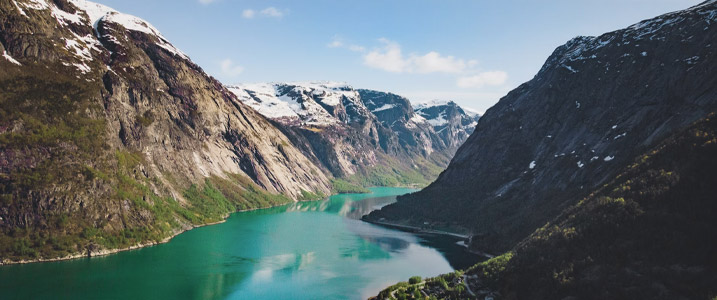
If you’ve ever dreamed of sailing through towering cliffs and weaving past waterfalls, while spending time anchoring in peaceful little villages, Norway’s fjords will feel like paradise. And if you want to truly experience them, the only way to do it is by boat.
In this guide, you’ll get the lay of the land (and sea) for how to explore the Norwegian fjords by boat, what you’ll see, and how to make it one of your most unforgettable travel experiences.
Why the Fjords Are Best Seen by Boat
The thing about Norway’s fjords is that they were made for boats. These deep, narrow inlets were carved by glaciers thousands of years ago, and the best way to explore them is the same way people have for centuries – by water.
Driving alongside the fjords gives you part of the picture. But from the water, it’s a different world. You see the cliffs from below, stretching high above you. You can even cruise right up to the base of waterfalls or stop in hidden coves and villages that aren’t reachable by road.
The real perk is that you’re not rushing from spot to spot. You’re taking your time and soaking it all in.
Choosing Your Type of Boat Experience
There’s no one “right” way to explore the fjords. It all depends on your style and comfort zone. But here are some of the most common types of boat experiences:
- Classic Cruise Ships
This is the most laid-back option. Everything’s planned for you. You just show up, unpack your suitcase, and let the ship carry you through the highlights. You can check out Geirangerfjord, Sognefjord, and Hardangerfjord with meals and excursions included. This is ideal if you want the views without having to think about logistics.
- Hurtigruten Coastal Voyage
This one’s part cruise, part local transport. The Hurtigruten line runs up and down Norway’s coast and stops in both major cities and remote villages. It’s a bit more rugged than a standard cruise but gives you a more authentic slice of daily Norwegian life. Plus, you can hop on and off in different towns, which is great for flexibility.
- Private Yacht or Charter Boat
If you’re after privacy, freedom, and a bit of luxury, go this route. You can charter a boat with a skipper or, if you’re confident, take the wheel yourself. It’s pricier than a cruise, but you get to choose your own pace and route.
- Kayaking and Smaller Vessels
If you’re adventurous (and reasonably fit), consider kayaking or joining a smaller expedition boat. These options let you sneak into tight spaces and get closer to the natural elements. (Imagine paddling under a waterfall or pulling into a deserted cove for a picnic. Pretty cool!)
The Must-See Fjords
Norway has over one thousand fjords. Obviously, that means you won’t have time for all of them. Since you’ll probably only be able to see a few on your trip, here are the ones you don’t want to miss:
- Geirangerfjord. This one’s the poster child of the fjords (and for good reason). It’s stunning, with steep cliffs, flowing waterfalls, and little farms clinging to the slopes in places you wouldn’t believe people could live. The Seven Sisters waterfall is especially dramatic. Most cruise itineraries include this fjord, and smaller boats often overnight here.
- Nærøyfjord. This branch of the Sognefjord is incredibly narrow – sometimes only 250 meters across. It’s a UNESCO World Heritage Site, and sailing through it feels like sliding into a hidden world. Bonus: It’s easy to combine this with the Flam Railway, one of the world’s most scenic train rides.
- Sognefjord. The longest and deepest fjord in Norway, stretching over 200 kilometers inland. If you want variety, this one’s for you. Snow-capped peaks, orchards, historic stave churches, and tiny fishing villages all line the route. There’s even a glacier you can hike to nearby.
- Hardangerfjord. This fjord is especially beautiful in spring and early summer, when the fruit trees bloom. Picture snow-dusted mountains behind pink and white blossoms. It’s also home to the Vøringsfossen waterfall and the scenic town of Odda.
- Hjørundfjord. Tucked away in the Sunnmøre Alps, Hjørundfjord is a lesser-known gem. While many travelers flock to the more famous fjords, Hjørundfjord stays pretty quiet. The steep, dramatic peaks rise straight out of the water.
- Lysefjord If you’ve seen photos of Preikestolen (Pulpit Rock) or Kjeragbolten – that giant boulder wedged between two cliffs – then you’ve already caught a glimpse of Lysefjord. Located in southern Norway, this fjord is narrower and steeper than many others, giving it a more dramatic feel. Boat tours often pass directly below these famous cliffs.
What You’ll Experience Along the Way
You might go in thinking it’s all about the scenery. And yes, the landscapes are next-level. But it’s the little surprises along the way that will stay with you. There’s no guarantee what you’ll experience on any given trip, but you can expect exciting things like:
- Pods of orcas cruising alongside your boat.
- Villagers and hikers waving from their docks as you sail past.
- Stopping for fresh waffles and cloudberry jam at a local cafe in a village of 50 people.
- Waking up to silence (except for the sound of water against the hull of the boat).
Norway’s coastal culture is deeply tied to the sea, and you’ll feel it in every port. Many towns only exist because of boat travel, and exploring this way helps you tap into a rhythm that’s slower and more connected. Definitely savor the unique experiences in each village.
Culture You Can Only Discover by Water
When you explore Norway’s fjords by boat, you’re going to meet people. This includes locals, fishermen, and other travelers. It’s not like visiting a museum where you read about traditions from behind glass. It’s more like being invited into someone’s living room and experiencing their world firsthand.
You might dock in a village like Undredal, which is known for its goat cheese and its tiny stave church. You’ll walk up from the pier, sample some brown cheese made right on the farm, and hear stories about how locals still get their mail delivered by boat. (Yes, seriously.)
You’ll also see how Norway blends old and new. Because one day you’re in a village that looks like it stepped out of the 1800s. And then the next day, you’re docking in a sleek, modern marina with a floating sauna and eco-friendly architecture.
Best Time to Discover the Fjords
Norway’s fjord season typically runs from May to September. That’s when the weather is mildest and most of the services are open. July and August are peak months, with longer daylight hours and plenty of greenery. If you want to avoid crowds, try late May or early September – it’s quieter but still pretty beautiful.
If you’re really brave, some tours run in the winter. It’s colder and darker, but the payoff is snow-covered cliffs, fewer tourists, and a shot at seeing the Northern Lights from your deck.
13 Tips to Make the Most of Your Experience
Planning a trip to the Norwegian fjords is exciting, but there are a few things that can really elevate your experience from good to unforgettable.
Here are some of our best tips to make the most of every moment on your trip.
- Pack Smart (Layers Are Your Friend)
Don’t let the pretty photos fool you – fjord weather is moody. One hour it’s sunny and mild, the next you’re in a chilly drizzle. Even in July, temperatures can swing dramatically between morning, afternoon, and evening.
Pack light but think in terms of layers – e.g. moisture-wicking base layers, a warm fleece or wool sweater, a windbreaker, and a waterproof shell. Gloves and a beanie aren’t overkill. Definitely bring them, especially if you’re out on a breezy deck at sunset.
- Bring Binoculars
You’ll spot things from the water you can’t get close to – so a small pair of binoculars can be a game changer. It’ll help you see wildlife, waterfalls, and villages that you pass by. However, if you forget them at home, chances are your boat might have a few pairs that you can use.
- Don’t Overschedule Yourself
It’s tempting to book every hour with excursions, hikes, and sightseeing stops. But part of the magic of the fjords is being still. Give yourself permission to do less. That might mean sitting on the deck, sipping your coffee, and watching the clouds move over the mountains.
- Talk to the Locals
Norwegians can seem reserved at first, but most are more than happy to chat once you break the ice – especially if you show genuine interest in their home. Ask where they go hiking or their favorite spot for waffles. These conversations often lead to unexpected discoveries that you won’t read about on a top 10 list from a travel site.
- Try the Local Food
Norway’s coastal cuisine is simple but rich in flavour. You’ll see fresh fish, smoked salmon, hearty soups, and lots of bread and butter. But you’ll also run into more adventurous options like brown goat cheese (brunost), reindeer stew, or pickled herring. Even if you’re not sure you’ll like it – try it. Eating the local food is all about experiencing a piece of the culture.
- Wake Up Early
Set an early alarm at least one day. Sunrise over the fjords is a quiet, almost sacred time. The light hits the cliffs at a low angle and you might have the deck entirely to yourself. It’s peaceful (and completely worth the lost sleep).
- Book At Least One Shore Excursion
Maybe it’s a glacier hike. Maybe it’s kayaking under a waterfall or learning how to bake lefse in a local kitchen. Whatever it might be, these off-boat experiences connect you even more deeply to the place. They also tend to become the moments you talk about the most after your trip when people ask you about your highlights.
- Keep a Fjord Journal
It’s a really good idea to keep a travel journal. You don’t need to write pages, but you should jot down a few quick notes every evening of what you saw, how you felt, and what surprised you. Norway’s fjords can blur together in your memory (they’re all stunning), so recording a few details while they’re fresh will help you remember the experience in full colour later.
- Use Offline Maps and Downloads
Signal gets spotty in remote areas, so download offline maps, schedules, and translations in advance. Also, consider downloading a star app or an aurora tracker. (If you’re sailing during the shoulder seasons, you might catch the Northern Lights, and you’ll want to know when and where to look.)
- Learn a Few Norwegian Words
You don’t need to become fluent, but knowing how to say “hello” (hei), “thank you” (takk), or “beautiful” (vakker) goes a long way. It shows respect can even earn you an extra smile or conversation that you otherwise wouldn’t have had.
- Take Breaks from the Camera
You’ll want to photograph everything. But make sure to set the camera down sometimes. Look with your own eyes, not through a lens. There’s a different kind of memory that forms when you experience something fully, without feeling the pressure to document it every step of the way.
- Don’t Stress About the Weather
Yes, the weather might shift ten times in one day. That’s the fjords for you. But rain is actually one of the things that makes the fjords so special, as it contributes to the waterfalls, fog, etc. Just roll with it and do your best to enjoy the weather, no matter what it looks like.
- Enjoy the Silence
One thing you’ll notice is how quiet it gets out there. Don’t be afraid of it. Not every silence needs to be filled with music, chatter, or social media. The fjords have their own rhythm and the best thing you can do is embrace it.
Find Your Charter Boat with TheYachtMarket
At TheYachtMarket, you have access to some of the top charter boats in the world. Whether you’re looking to discover the fjords of Norway or bask in the sun of the U.S. Virgin Islands, we can help you find the perfect boat for your next trip. Feel free to reach out if you have any questions at all!