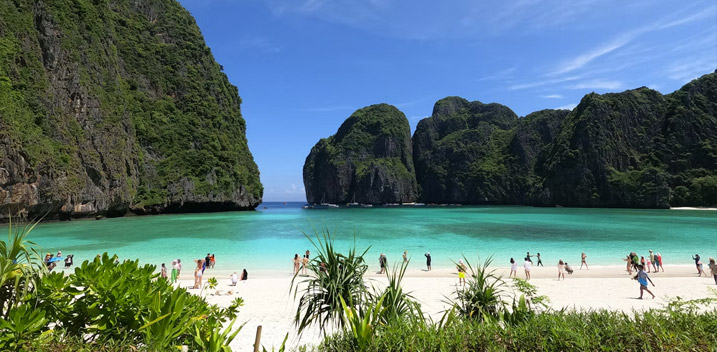
You’ve probably seen breathtaking pictures of Maya Bay, or maybe you’ve watched The Beach with Leo DiCaprio and dreamed of visiting. Well, for years, millions of tourists had the same dream – and they flocked to Maya Bay in droves. But that sudden influx came at a major cost.
Overcrowding, pollution, and environmental destruction nearly wiped out the bay’s natural beauty. The white sand beaches became littered with trash, the once-thriving coral reefs were pretty much reduced to skeletal remains, and marine life that had called the bay home for centuries was disappearing.
At some point, the damage became undeniable, and local authorities were faced with a difficult choice: Allow tourism to continue at the expense of the environment or take drastic action to save “the beach.”
The Thai government ultimately made a bold decision – to shut down Maya Bay indefinitely. It was a controversial move, but as the years passed, it’s looking like they were right.
But what exactly went wrong in the first place? And how is the bay faring now that it has reopened under new regulations? Let’s take a closer look.
The Overwhelming Impact of Tourism
Before Maya Bay’s closure, it had become one of Thailand’s most popular tourist destinations. Each day, thousands of visitors descended upon the small bay, eager to take in its crystal-clear waters, dramatic limestone cliffs, and soft, white sand. On paper, it was a dream destination. In reality, it was an environmental nightmare.
At its peak, Maya Bay was welcoming over 5,000 tourists a day, arriving via an endless stream of speedboats and long-tail boats. With such a high volume of visitors, the impact on the ecosystem was devastating in a few specific ways:
Destruction of Coral Reefs
One of the most immediate and severe consequences of mass tourism was the destruction of the coral reefs. The bay’s coral structures, which had taken hundreds of years to develop, were being obliterated at an alarming rate. The primary culprits were:
- Boat anchors: With no proper docking regulations, boats were dropping anchors directly onto the reefs, shattering fragile coral structures. Without designated mooring buoys or docking stations, tour operators frequently allowed their boats to anchor in random locations, causing anchors to drag across the seabed. This resulted in broken coral fragments, preventing natural regeneration. (Some coral species can take decades or even centuries to grow, meaning that each incident of anchor damage set back the reef’s recovery timeline significantly.)
- Sunscreen pollution: Chemicals from sunscreen washed off swimmers and snorkellers, leading to coral bleaching. Many commercial sunscreens contain oxybenzone and octinoxate, which disrupt coral reproduction and damage the DNA of coral larvae. These chemicals accelerate coral bleaching, a phenomenon where corals lose their symbiotic algae and turn white, ultimately leading to their death if conditions do not improve. In heavily touristed areas like Maya Bay, the cumulative effect of thousands of swimmers wearing chemical-laden sunscreen resulted in a toxic environment for marine life. Even biodegradable sunscreens, if overused, can contribute to water contamination, highlighting the need for stricter ecotourism guidelines.
- Physical damage: Tourists walking on corals, intentionally or unintentionally, caused further breakage. Many visitors, unaware of the fragile nature of coral reefs, stood on coral formations while snorkelling or wading through shallow waters. Even light contact can cause significant harm to corals, as they are living organisms with delicate exoskeletons. Some tourists also attempted to collect pieces of coral as souvenirs, further depleting the reef’s structural integrity. Additionally, the high foot traffic in shallow waters stirred up sediment, which settled on corals and blocked the sunlight they needed for photosynthesis, slowing their growth and increasing their vulnerability to disease.
Disrupting Marine Life
Maya Bay was once home to a diverse range of marine species, including the blacktip reef shark – a species that had thrived in the bay’s shallow, protected waters. However, the constant influx of boats, noise pollution, and human activity caused these creatures to abandon the area.
- Boat traffic and noise pollution scared marine animals away, disrupting natural feeding and breeding cycles.
- Overfishing and irresponsible snorkelling practices led to further depletion of species that had once flourished in the bay.
- Plastic pollution and food waste dumped into the waters created an artificial environment that was harmful to native wildlife.
By the late 2010s, the waters that once teemed with life had become quiet, with only the occasional sighting of marine creatures. Maya Bay had transformed from a thriving ecosystem into an underwater wasteland.
Erosion and Beach Degradation
The sheer number of tourists trekking across Maya Bay’s shores also took a toll on the beach itself. The fine white sand, shaped over centuries, was being eroded at an unnatural pace.
- Trampling by thousands of visitors daily compacted the sand, making it difficult for native vegetation to grow. It also destroyed the aesthetic beauty of the cove, which left it looking much less beautiful than visitors were anticipating upon arrival.
- Construction of temporary facilities for tourists further altered the landscape. It took the area from a natural landscape to a much more commercialised looking spot.
- Unregulated tourism activities, such as beach parties and large gatherings, contributed to littering and waste accumulation. This meant trash and litter eventually ended up in the water, which put marine life and coral at further risk.
Maya Bay was slowly being destroyed – not by natural disasters, but by people. Authorities realised that if they didn’t act soon, there wouldn’t be anything left to save. And, thankfully, they did act.
The Decision to Shut Down Maya Bay
By 2018, it was clear that Maya Bay could not sustain this level of tourism any longer. The environmental toll was undeniable, and researchers warned that without immediate action, the damage could be irreversible. The Thai government had a difficult decision to make: should they prioritise short-term tourism revenue, or should they take a drastic step to save the bay for future generations?
After much debate, Thailand’s Department of National Parks, Wildlife, and Plant Conservation made the call – Maya Bay would be closed indefinitely, starting June 1, 2018. Initially, the closure was planned for four months, but once scientists assessed the damage, it became clear that a few months wouldn’t be nearly enough time for the ecosystem to recover. The closure was extended indefinitely, and what began as a temporary pause became a long-term conservation effort.
The shutdown was not a decision made lightly. Maya Bay was one of Thailand’s most famous tourist attractions, generating millions in revenue annually. However, the government recognised that allowing the destruction to continue unchecked would ultimately be more costly. They cited several key reasons for the closure:
- Giving coral reefs time to regenerate: Scientists estimated that coral restoration would take several years, not months.
- Allowing marine life to return: Without the constant disturbance of human activity, species like blacktip reef sharks could begin repopulating the bay.
- Preventing further beach erosion: By keeping foot traffic off the sand, the natural shape and stability of the beach could start to restore itself.
- Developing a long-term conservation plan: The Thai government used this time to work with marine biologists and conservationists to create a sustainable tourism model for the future.
The decision to shut down Maya Bay was met with mixed reactions. While environmentalists and scientists praised the move, some local businesses that relied on tourism expressed concern about the financial impact. Many boat operators, tour guides, and nearby hotels depended on the daily influx of visitors to make a living.
However, as the closure continued, the conversation shifted. Tourists began to recognise the importance of protecting the area, and Thailand started promoting alternative destinations to ease the economic burden on local communities. Meanwhile, the government invested in developing sustainable tourism models that could eventually allow visitors to return without repeating the mistakes of the past.
Within just a year of the shutdown, promising signs of recovery began to emerge:
- Water clarity improved significantly, as the absence of boats reduced pollution and sediment disruption.
- Marine life returned, with blacktip reef sharks making a noticeable comeback.
- Coral restoration projects began, spearheaded by marine biologists transplanting new coral structures into the bay.
- Beach vegetation regrew, as the sand was no longer being trampled daily.
The early success of the closure proved that nature could heal – if given the chance. Maya Bay was on its way to recovery, but the real challenge was figuring out a way to let the beach continue to thrive once humans were reintroduced to the environment.
The Reopening: A New Approach to Tourism
In 2022, Maya Bay reopened – but this time, under strict new regulations designed to prevent a repeat of past mistakes. The Thai government implemented measures to control visitor numbers and minimise environmental impact.
- Limited visitor capacity: Only 375 visitors are allowed in the bay at any given time, ensuring that the ecosystem isn't overwhelmed.
- No boats allowed in the bay: Instead of docking on the beach, boats must use a designated pier outside the bay to prevent further reef damage.
- No swimming allowed: Tourists can walk along the shore but are not allowed to enter the water, protecting the recovering marine life.
- Strict enforcement of regulations: Park rangers monitor the area daily to ensure compliance and continued preservation.
- Eco-friendly tourism practices encouraged: Visitors are educated on how to reduce their impact, including the use of reef-safe sunscreen and responsible waste disposal.
This new model of sustainable tourism is already showing positive results. While Maya Bay is once again accessible, it is being managed with conservation as the priority. Authorities remain vigilant, ready to adjust regulations if necessary to protect this natural treasure for future generations.
Additionally, eco-tourism initiatives have been introduced to help support conservation efforts. Some of these include guided nature walks that educate tourists on the local ecosystem, coral restoration programs where visitors can participate in conservation activities, and partnerships with environmental organisations to fund ongoing preservation efforts.
Maya Bay’s reopening represents a shift in how tourism is managed – not just in Thailand, but worldwide. It serves as a blueprint for other destinations struggling with the impact of mass tourism. By prioritising environmental sustainability over short-term profits, Maya Bay has set a precedent that responsible tourism is possible.
Starting on August 1, 2025, Maya Beach will close again for scheduled maintenance and restoration – something that has been planned for ahead of time. However, this time, the bay will only be closed to tourism for two months. The Thailand government now shuts down the bay for two months out of every year to provide additional relief for the environment, so that millions more can enjoy it in the future. Thankfully, this is done during the rainy season.
The Bigger Picture: Lessons from Maya Bay
Maya Bay’s story isn’t just about Maya Bay. In reality, it’s a cautionary tale for the entire travel industry. The rapid degradation and subsequent recovery of the bay highlight the need for sustainable tourism practices worldwide.
Maya Bay demonstrates how even the most beautiful and resilient natural environments can quickly deteriorate under unchecked tourism. This situation is not unique – many other destinations, from the Great Barrier Reef to Machu Picchu, are facing similar threats due to over-tourism.
The dramatic recovery also serves as proof that with proper intervention, nature has the ability to heal itself. However, this healing requires time, commitment, and responsible policies. It also shows that conservation efforts must be ongoing rather than reactive.
Pushing for a Better Future
As tourists and travellers, we all play a crucial role in protecting the world’s natural wonders. Individually choosing smart behaviours and habits can help prevent another Maya Bay-style crisis.
At first glance, Maya Bay’s story seems like a tale of “what went wrong.” However, it’s also about what can be done right. It proves that when governments, conservationists, and travellers work together, it’s possible to balance economic benefits with environmental responsibility. In that sense, this is an encouraging tale of what can be.
At TheYachtMarket, we believe in responsibly enjoying the environment so that it’s safe and protected for people to enjoy for many centuries to come. Whether you’re boating, fishing, swimming, or simply enjoying time relaxing on the beach, we encourage everyone to do so responsibly! This ensures that future generations can continue to experience these natural treasures.